Types of Loans Explained: Is a Collateral Loan a Good Idea?

What Are the Two Main Types of Loans? Is a Collateral Loan a Good Idea? How Do I Apply?
Learn about collateral and non-collateral loans, how collateral loans work, and how loan businesses can manage them with FinApp.
Loans are generally divided into two main types: collateral loans and non-collateral loans.
A collateral loan, also called a secured loan, requires the customer to provide an asset as security. Gold, vehicles, property, or other valuable assets may be used as collateral depending on the loan type.
A non-collateral loan, also called an unsecured loan, does not require an asset as security. The lender usually considers factors such as the customer's income, credit history, and repayment ability.
For loan businesses, managing both types of loans requires accurate customer, loan, payment, and document records.
Common Business Problem
Loan businesses may handle different types of loans for many customers. Managing everything manually can become difficult as the number of accounts increases.
Businesses may need to maintain:
- Customer details
- Loan information
- Collateral details
- Asset or vehicle information
- Loan amount and interest
- Repayment details
- Supporting documents
- Renewals and closures
When these records are maintained using notebooks, Excel sheets, or separate files, it can lead to manual work, duplicate records, missing information, and data entry errors.
Why It Matters
Proper loan management is important because every loan needs accurate records from the beginning of the application to repayment or closure.
For collateral loans, businesses also need to maintain complete information about the asset connected to the loan.
Good records help businesses:
- Track loans easily
- Identify collateral quickly
- Maintain customer information
- Manage repayments
- Store supporting documents
- Handle loan renewals
- Reduce manual errors
- Provide better customer service
For pawn brokers, gold loan businesses, and other lending businesses, organized loan management can save time and make daily operations easier.
How Businesses Normally Handle It
Many small loan businesses start by using registers, Excel spreadsheets, or separate documents.
This can be manageable when there are only a few loans. But when a business handles Gold Loans, Auto Loans, other Collateral Loans, and Non-Collateral Loans, maintaining separate records can become more difficult.
A dedicated loan management software can help bring customer, loan, collateral, payment, and document information into one system.
CK Tech Feature – Collateral & Non-Collateral Loan Processing
FinApp V5.14 from CK Tech Solutions supports both Collateral and Non-Collateral Loan Processing.
Businesses can use FinApp to manage:
- Gold Loans
- Auto Loans
- Other Collateral Loans
- Non-Collateral Loans
FinApp also allows businesses to maintain complete collateral details and upload the required supporting documents.
Complete Collateral Details in FinApp
FinApp allows businesses to record relevant collateral details directly in the system.
Businesses can also upload required supporting documents and keep them connected with the loan record.
Example: Auto Loan
For an auto loan, the business can record details such as:
- Registration Number
- Vehicle Type
- Model / Year
- Other vehicle details
- Supporting documents
Documents such as PDF, JPG, and DOC files can also be uploaded to the system.
This creates a complete digital record of the loan, collateral, and related documents in one place.
Is a Collateral Loan a Good Idea?
A collateral loan can be a suitable option when a customer has an acceptable asset and wants to borrow against its value.
For a loan business, collateral also provides security for the loan. However, the terms, interest rate, collateral requirements, and repayment conditions depend on the lender and type of loan.
Businesses should clearly explain the loan terms and collateral requirements to customers before processing the loan.
How Do I Apply for a Collateral Loan?
The exact process depends on the lender and type of collateral. Generally, the process may include:
1. Customer Registration
Collect the customer's basic and required KYC details.
2. Loan Application
Collect the required loan information from the customer.
3. Collateral Details
Record information about the asset offered as security.
4. Collateral Valuation
Evaluate the collateral according to the lender's policies.
5. Loan Processing
Finalize the loan amount and applicable terms.
6. Document Submission
Collect and record the required supporting documents.
7. Loan Approval and Disbursement
After completing the required checks, the loan can be processed according to the lender's terms.
With digital loan software, businesses can maintain these details in an organized way.
How CK Tech Works
With FinApp Pawn Broking Software, businesses can manage the loan process digitally.
Businesses can create a customer record, process the loan, add collateral details, upload documents, record payments, and manage renewals or closures from the system.
This helps keep important information connected to the correct loan account.
Benefits for Loan Businesses
Manage Different Loan Types
Handle Collateral and Non-Collateral Loans from one platform.
Complete Collateral Records
Maintain important details about gold, vehicles, and other collateral.
Digital Document Management
Upload and maintain supporting documents with the relevant loan record.
Less Manual Work
Reduce dependence on registers, spreadsheets, and separate files.
Easy Loan Tracking
Quickly access customer, loan, collateral, and payment information.
Better Record Accuracy
Keeping information in one system can help reduce manual entry mistakes.
Suitable for Growing Businesses
Manage increasing numbers of loan accounts in a more organized way.
Frequently Asked Questions
Conclusion
Collateral and non-collateral loans are two broad types of lending. A collateral loan uses an asset as security, while a non-collateral loan does not require an asset as security.
For loan businesses, managing different loan types manually can become difficult as the business grows. FinApp V5.14 from CK Tech Solutions provides one platform to manage Gold Loans, Auto Loans, other Collateral Loans, and Non-Collateral Loans.
With complete collateral details, supporting document uploads, payment management, and digital loan records, FinApp can help pawn brokers and loan businesses manage their daily loan operations in a more organized way.
Related Articles
You Might Also Like
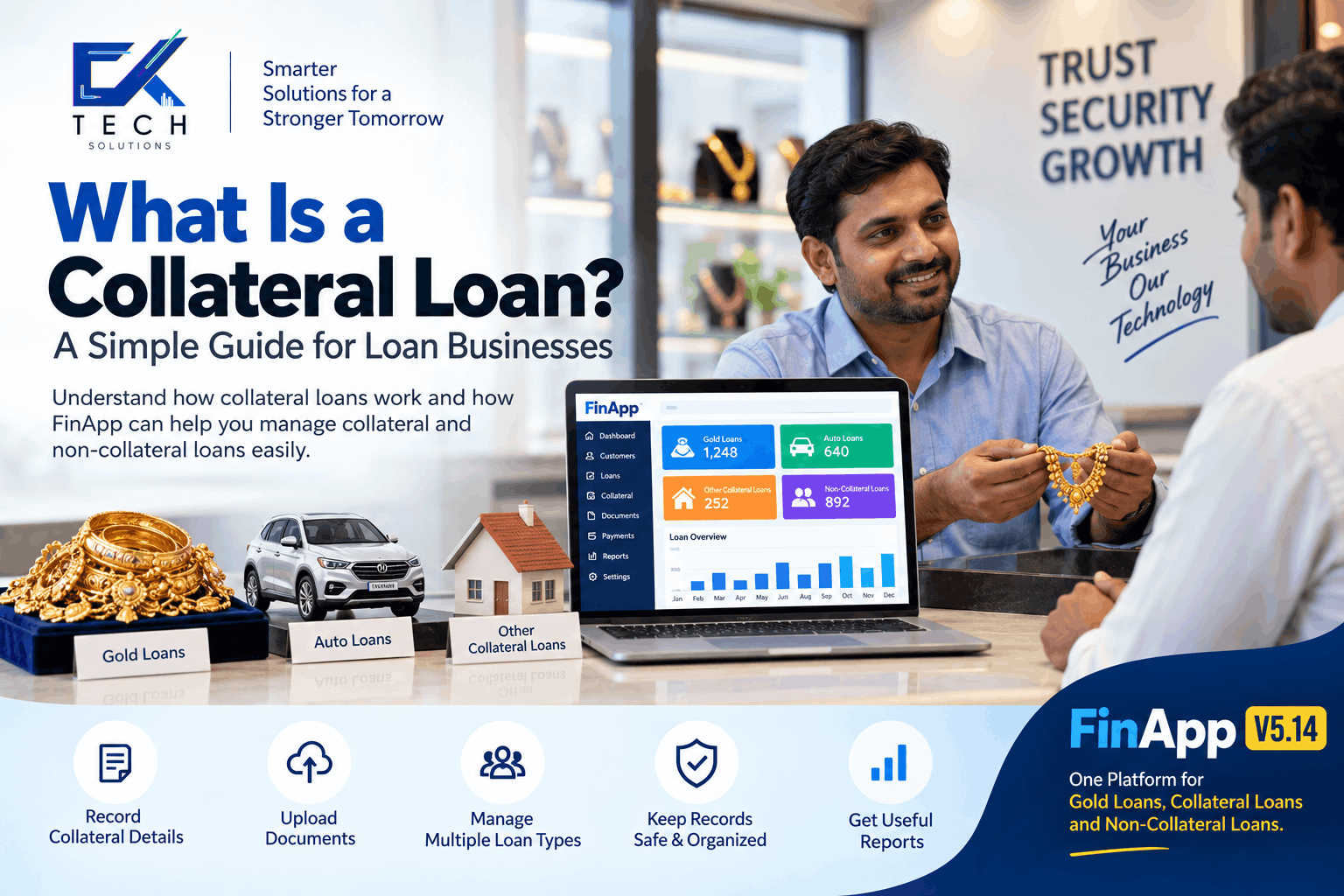
Collateral Loan Management: A Simple Guide for Businesses
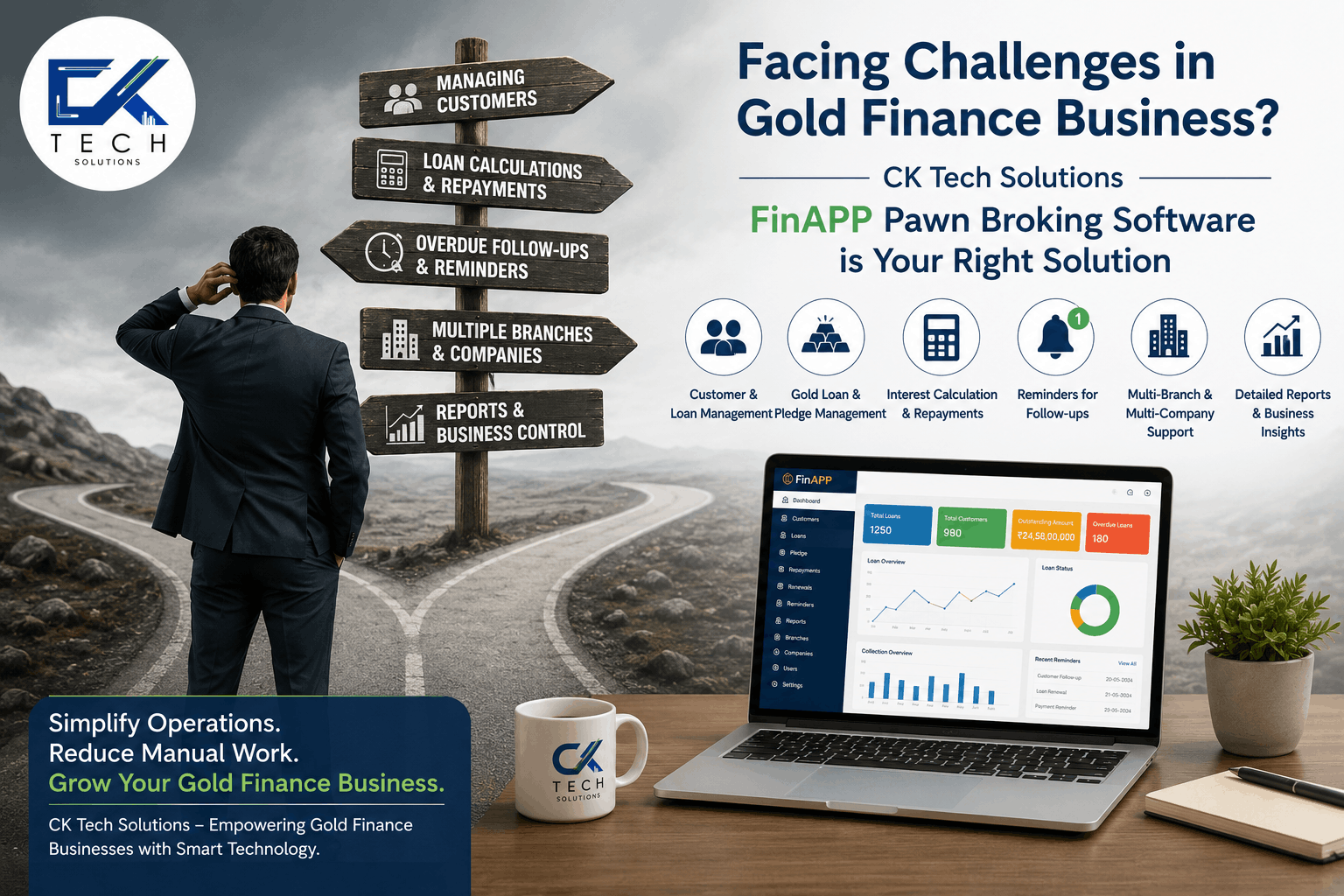
Top Challenges Facing Gold Finance Businesses in South India

How Gold Valuation Works: Complete Guide for Gold Loans and Pawnbrokers
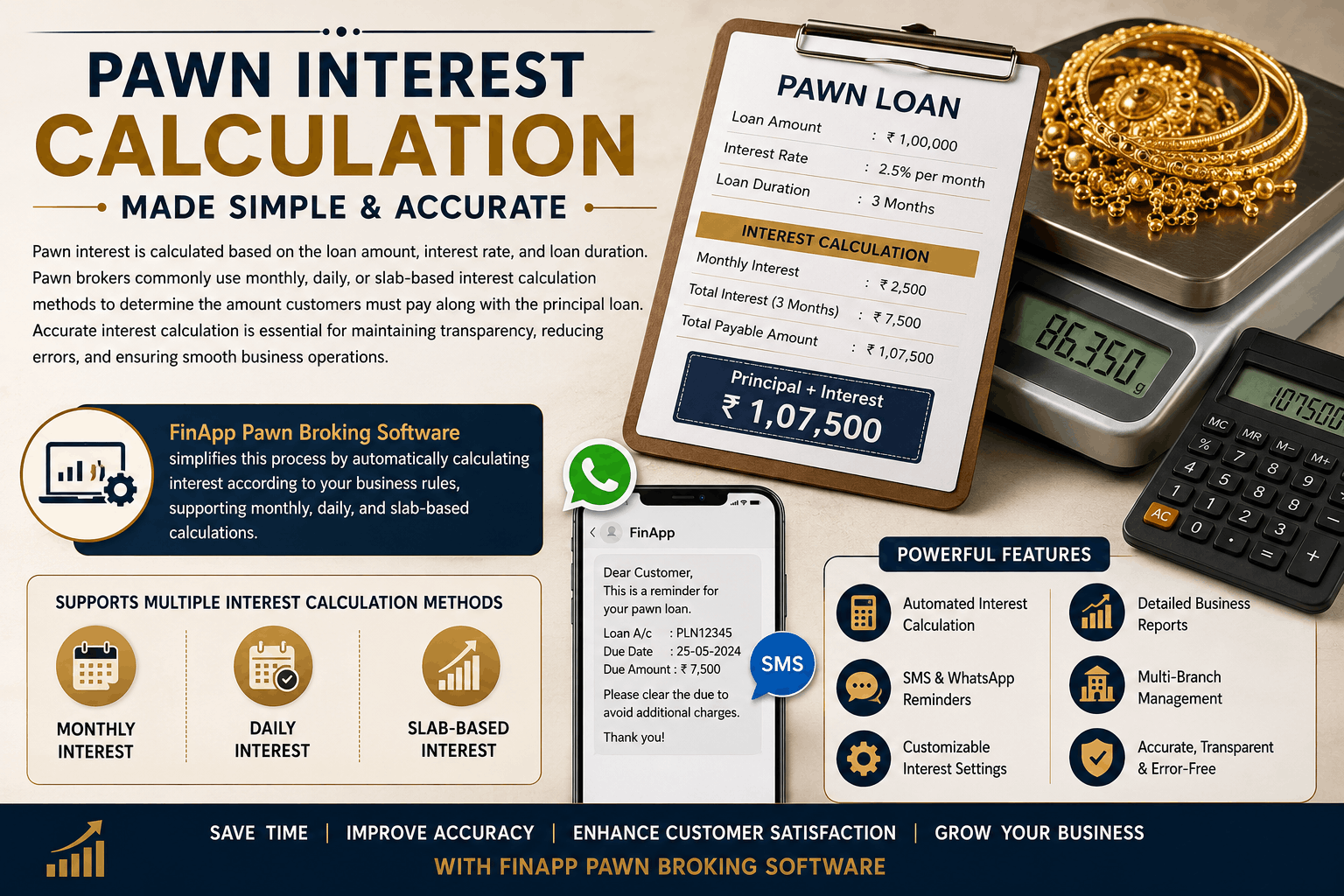
Pawn Loan Interest Explained: Step-by-Step Calculation Guide